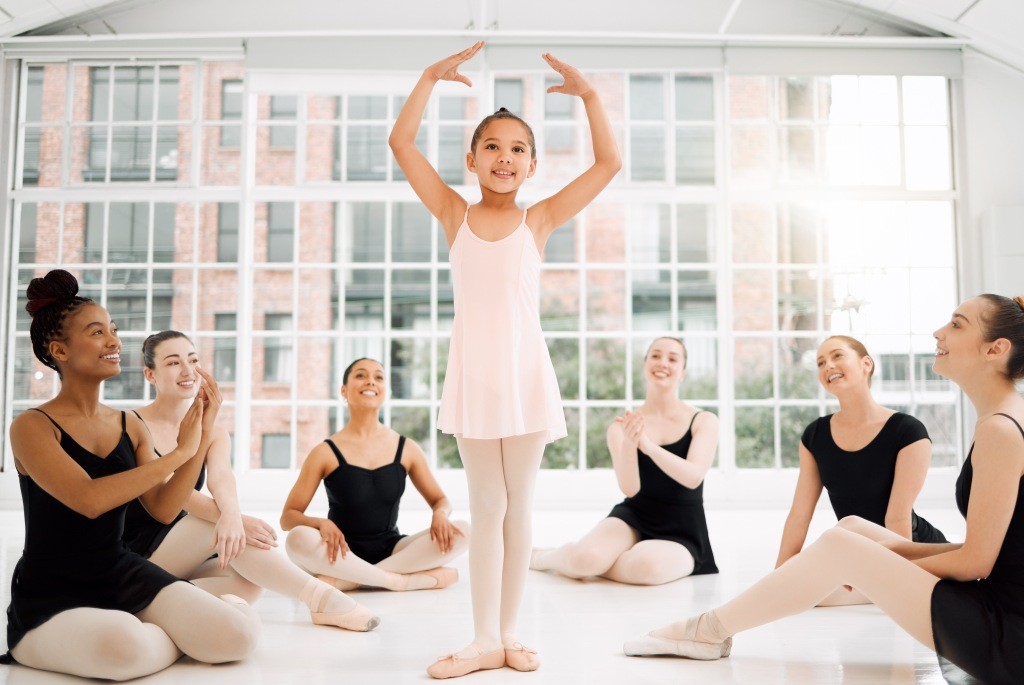
Should you walk into a particular ballet school, you may find a few people quietly observing class from the side. Sometimes they’re injured dancers unable to participate. Often times, they’re students waiting for their turn in the center. Occasionally they’re parents, teachers, or simply ballet enthusiasts fascinated by the art form. But can watching a ballet class actually improve your technique?
I’ve found that the short answer is yes, but perhaps not in the way many dancers expect.
While nothing replaces physically doing the exercises yourself, observation can be a surprisingly valuable tool for developing technical understanding, musical awareness, and artistic sensitivity. In fact, some of the most successful dancers and coaches make a habit of watching class as carefully as they participate in it.
Learning Through Observation
You may not be surprised to read that humans are natural imitators. Just think of the toddler who copies everything their mum or dad does! Long before we learn through detailed explanations, we learn by watching others move. Ballet is no exception.
When you observe a class, you’re given a unique opportunity to see movement patterns from the outside. During your own exercises, you’re often focused on remembering combinations, coordinating your body, and keeping up with the music. Watching someone else allows you to step back and notice details that may be difficult to recognise when you’re dancing.
You might suddenly see how a dancer uses their turnout throughout a tendu, how their weight shifts during an adagio, or how they coordinate their arms and head in a pirouette preparation. These observations can create valuable mental models that you can later apply in your own dancing.
Spotting Common Mistakes
One unexpected benefit of watching class is learning from other people’s mistakes.
It’s often easier to identify technical issues in another dancer than in ourselves. We may notice a lifted shoulder, a sickled foot, a collapsed supporting leg, or a loss of alignment during a turn. Once we’ve recognised these errors externally, we’re often better equipped to identify them in our own bodies.
Teachers know this phenomenon well. Sometimes watching another student receive a correction can be just as educational as receiving the correction yourself.
Rather than thinking, “That correction isn’t for me,” experienced dancers often think, “Could I be doing that too?”
The answer is frequently yes.
Understanding the Purpose Behind Exercises
One of the greatest advantages of observation is the chance to understand why exercises are being given.
When you’re dancing, your attention is divided between execution and survival. You may be so focused on getting through a complex petit allegro that you miss the teacher’s broader intention.
Watching from the side allows you to analyse the structure of class. You begin to see how exercises build upon one another and how a teacher develops specific skills throughout the lesson.
Perhaps the tendus are preparing the feet for jumps later in class. Perhaps the adagio is reinforcing the balance required for turns. Understanding these connections can make your own training more purposeful and effective.
Developing a Better Eye
Many dancers spend years training their bodies but relatively little time training their eyes.
Yet the ability to assess movement critically is an important skill, particularly for advanced students, teachers, and aspiring professionals.
Watching class helps develop what teachers often call a “ballet eye” i.e. the ability to recognise clean lines, efficient movement, musical phrasing, and technical accuracy.
This skill becomes increasingly valuable as dancers progress. Self-correction is a hallmark of mature training, and self-correction depends on understanding what you’re aiming to achieve.
The more high-quality dancing you observe, the clearer that picture becomes.
The Role of Mental Practice
Sports psychology has long recognised the value of visualisation and mental rehearsal. Research suggests that mentally practising movements can activate some of the same neural pathways involved in physical execution.
While watching class isn’t exactly the same as visualisation, it can contribute to this process.
Imagine observing a beautifully executed développé. Rather than passively watching, you mentally follow the movement. You notice the timing, placement, and coordination. You imagine how the movement feels.
This active observation can reinforce technical concepts and strengthen your understanding of movement patterns, even when you’re not physically dancing.
This is particularly useful during periods of injury recovery, when physical participation may be limited but learning can continue.
What Watching Can’t Do
Of course, observation has limits.
You cannot build strength, flexibility, endurance, or coordination simply by watching others dance. Ballet is ultimately a physical discipline that requires repeated practice.
A dancer may intellectually understand every detail of a perfect pirouette, but understanding and execution are not the same thing.
Think of watching class as a supplement rather than a substitute. It can deepen knowledge, sharpen awareness, and reinforce technical principles, but those insights still need to be translated into physical action.
The studio floor remains the real classroom.
How to Watch Productively
Not all observation is equally useful. If you’re scrolling through your phone while sitting at the back of the studio, you’re unlikely to gain much.
Instead, watch with intention.
Ask yourself:
- What correction is the teacher giving repeatedly?
- Which dancers demonstrate the movement most effectively?
- What makes their execution successful?
- How are they using their placement, turnout, musicality, or coordination?
- Can I identify technical habits that I share?
Taking occasional notes can also help, particularly if you’re observing a class because of injury or absence from active participation.
The goal is to become an active observer rather than a passive spectator.
A Valuable Part of Training
Ballet training is often associated with movement, sweat, and repetition. Yet some of the most important learning happens through careful observation.
Watching a ballet class can improve technical understanding, strengthen analytical skills, increase awareness of corrections, and develop a more sophisticated eye for movement. It won’t replace dancing, but it can make your dancing smarter and more informed.
The next time you watch a YouTube video of ballet rehearsals from ballet companies such as the Royal Ballet, don’t assume you’re wasting your time. The next time you find yourself sitting on the sidelines, don’t assume the learning has stopped.
Pay attention. Watch closely. Listen carefully.
You may finish the video, or leave the class with insights that prove just as valuable as another set of pliés at the barre.